
OnlyFans does not run a discovery feed, so subscribers rely on ranking sites to find pages worth a look. A ranking card is the small block of data a directory shows before you click through: price, posting activity, follower totals and a short description. Reading it well saves money and time. Reading it badly leads to stale subscriptions and pay-per-view messages that never stop.

This guide breaks a card into its parts and explains what each part proves and what it does not. It covers price history, activity signals, follower counts and the moments when you should ignore the card entirely. The approach is plain: treat the card as a summary, then confirm everything on the live page.
Ranking sites exist because the platform itself offers no built-in directory or search feed. A service such as BestOnlyFans collects public profile information and sorts it into comparable cards. That sorting is editorial, not official, and it can only ever reflect what is visible at the moment of collection.
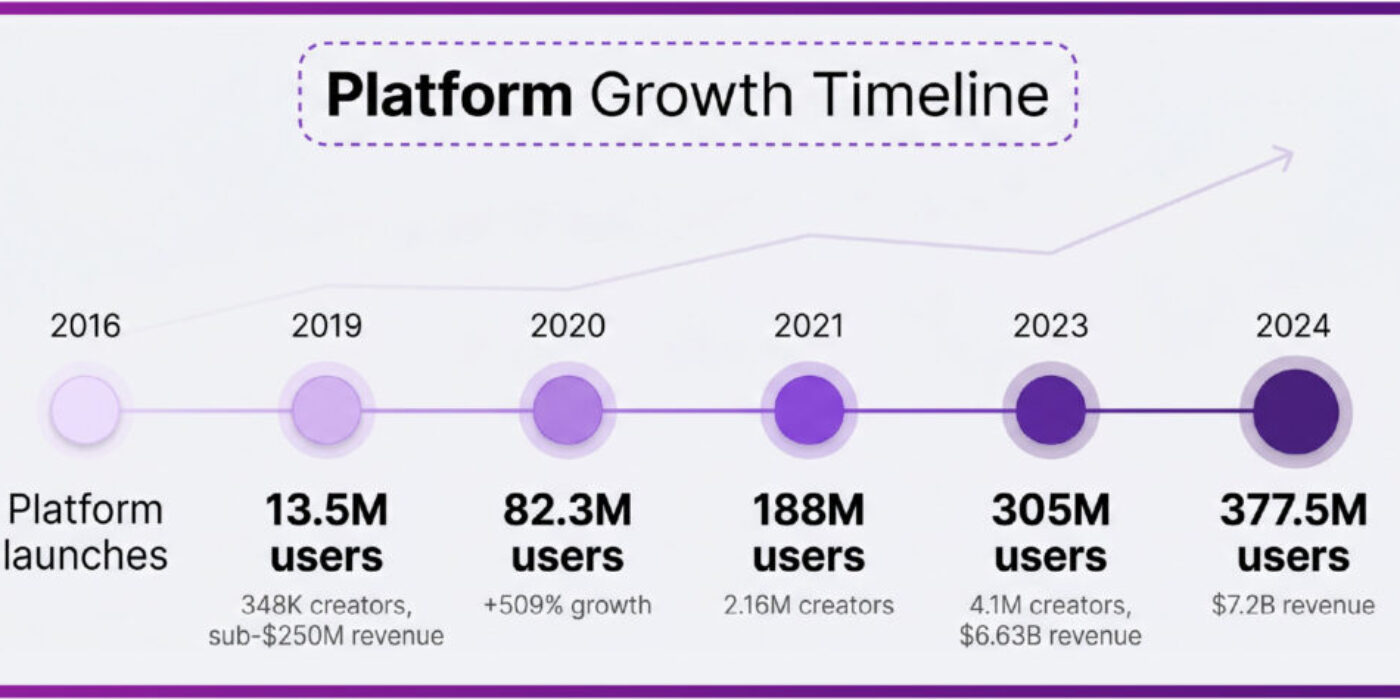
Platform growth explains why ranking sites multiplied. Between 2016 and 2024 the user base moved from a niche audience to a mainstream one, and the number of active pages grew with it. More pages means more noise, which is exactly the problem a ranking card is meant to solve. The chart above shows that growth curve in broad strokes.
Anatomy of a Ranking Card
Every card is built from the same handful of blocks, even when the visual design differs. The image, the name and the handle identify the page. The price line states the current subscription cost.
Each block answers one question and leaves others open. Price tells you what entry costs today, not what it cost last month.
A good card pairs a clear price with a recent post date and honest description text. A poor card shows a promotional price with no end date, a post date months old, and description text copied across several unrelated pages.
| Signal | Good example | Poor example |
| Price line | Clear standard price with a stated promo end | Low number with no expiry shown |
| Post date | Updated within the last few days | Last update months ago |
| Description | Specific about what is posted and how often | Generic text reused across pages |
| Follower block | Count shown with an activity context | Large number with no other signals |
The card is a snapshot, and snapshots age quickly on a platform where prices and posting habits change month to month. Treat the structure as a checklist rather than a verdict.

Field Reference Table
Different directories use different field names, which makes comparison harder than it needs to be. The table below maps the common fields to what each one actually does and what it cannot prove.
| Field | What it does | What it does not prove |
| Subscription price | Shows current cost to subscribe | Does not show future price changes |
| Promo flag | Marks a temporary first-month discount | Does not confirm the standard rate |
| Post count | Shows total posts published | Does not show how recent they are |
| Last update | Shows when the card was refreshed | Does not guarantee the page still posts |
| Follower total | Shows accounts that pressed follow | Does not show renewal behaviour |
| Media count | Shows volume of uploaded media | Does not show how it is distributed |
Paid subscriptions on the platform run from $4.99 at the minimum to $49.99 at the maximum, with most paid pages sitting between $4.99 and $15 and averages landing in the $5 to $10 range. There is no base price below $4.99; only promotional first months may dip under that floor.
Free pages are a separate category. They set the price to $0 and earn through pay-per-view messages and tips instead of subscriptions.

Price History Rows
A price history row shows how the displayed subscription cost changed over time. Directories compile it by recording the price each time they refresh a card.
Read movement, not isolated points. A price that shifted once from a promo into the standard rate is normal.
One rule matters more than the rest: when a creator raises the subscription price, auto-renew stops. Existing access lasts until the current paid period ends, so a raise never charges you the new rate without a fresh decision.
- Note the current displayed price and whether a promo label sits beside it.
- Compare the oldest entry in the history row with the newest to see direction.
- Check whether promo periods are marked or left unlabelled.
- Confirm the price again on the live page before subscribing.
- Record the renewal date so a later price change does not surprise you.
Platform fees apply on top of everything: a 20% cut on subscriptions, tips and pay-per-view, with the creator keeping 80%. That split does not change what you pay as a subscriber, but it explains why some pages lean heavily on pay-per-view messaging rather than subscription income.

Activity and Freshness Signals
Activity signals tell you whether a page is alive. They are the most practical part of any card, because a dormant page at any price is a poor purchase.
Markers worth checking include the date of the most recent post, the gap between posts, and any note about posting frequency in the description. A card refreshed yesterday with a post from last week is far more useful than a card refreshed a year ago with an impressive total. A practical starting point is best only fans top pages, which lists pages by the signals above.
- Recent posts: a latest post dated within the last several days.
- Last update: the card itself refreshed within the current month.
- Posting rhythm: a stated schedule that matches the visible gap between posts.
- Like velocity: engagement rising across recent posts rather than frozen on old ones.
- Media count: total uploads that keep growing instead of sitting still.
A card that lists these markers together gives you a reasonable picture. A card that shows only a follower total and a price gives you almost nothing to work with.
Tip: if a card shows a very low price with no promo end date, check the live page before subscribing. A first-month discount often reverts to the standard rate, and the difference is charged from the second month onward.

Follower Counts and What They Hide
Follower totals are the most visible number on any card and the least informative on their own. A follow costs nothing, so the total mixes active subscribers, lapsed accounts, free followers and dormant profiles.
Earnings distribution across the platform is heavily skewed, as the breakdown above suggests, which means follower counts at the top end do not translate into a typical experience elsewhere. A page with a large following can still post rarely, price high, or push most material behind pay-per-view.
For budgeting, work from the monthly cost rather than the follower number. A subscription at $9.99 plus a handful of pay-per-view purchases can exceed a $29.99 subscription with no extras.
- Subscription fee: charged at the start of each billing period.
- Renewal charge: repeats automatically unless you cancel before the period ends.
- Pay-per-view messages: optional purchases that arrive in your inbox.
- Tips: voluntary payments sent directly to the creator.
- Promotional changes: a discounted first month that reverts to the standard rate.
A related service that compares public profile prices, promotions, activity and media counts can help you line up candidates side by side. BestOnlyFans does this by collecting publicly visible card fields and grouping them for comparison, without access to anything private.
Even then, the card only reflects what was public at collection time. If the live page and the card disagree on price or posting activity, the live page wins, because it is the page you actually pay.

Spotting Stale Cards
A stale card is one that has not been refreshed while the page behind it kept changing. Stale cards are common on directories that index a wide range of pages once and update rarely.
- Last update date older than the current month.
- Latest post date that does not match the stated posting frequency.
- Description text that reads as generic or reused.
- Price history with a single entry and no movement.
- Media count or follower total that appears frozen across visits.
When several of these appear together, treat the card as a starting point only. Open the live page and verify price, posting recency and description before you commit.
Two-step verification adds a code or a biometric check before a new device can log in.
When to Ignore the Card
The card is a summary, and summaries lose to direct observation. The moment the live page contradicts the card on price, activity or posting frequency, follow the live page.
The same applies to follower totals and promotional language. Neither proves the page suits your interests, and neither predicts how often new material appears.
A practical comparison across several candidates helps here, and a rankings service such as the one described earlier can shorten the shortlist. For a wider pool of candidates, this collection of best only fans top pages groups public cards for side-by-side reading.
- Do not subscribe on a follower count alone.
- Do not assume a low price stays low after the first month.
- Do not trust a card that shows no activity or update date.
- Do not ignore the renewal date after subscribing.
- Do not treat a promo price as the standard rate.
Used this way, a ranking card is a filter rather than a promise. It narrows the field, and the live page makes the final call.
BestOnlyFans refreshes its rankings every month.
FAQ
Does a ranking card show the real subscription price?
It shows the price visible when the card was last refreshed. Confirm the current price on the live page before subscribing, especially when a promotional label appears.
Why did my subscription price change without notice?
When a creator raises the price, auto-renew stops and existing access continues until the current paid period ends. You are only charged the new rate if you resubscribe.
Are free pages really free?
Free pages set the subscription to $0 and earn through pay-per-view messages and tips. The subscription costs nothing, but optional purchases can still add up.
What is the maximum subscription price?
Paid subscriptions run from $4.99 at the minimum to $49.99 at the maximum, with most paid pages between $4.99 and $15 and averages around $5 to $10.